
Closer to the Work: How Direct Distribution Changed Everything About How This Food Bank Buys.
Table of Contents
Sherry Hooper ran The Food Depot for 20 years. And in almost every interview she gave, she told the same story.
A senior-aged woman called the food bank to say she couldn’t eat the whole bunch of fresh carrots they’d given her. She didn’t have any teeth. So she’d been feeding them to the horse that lived next door.
“We were excited to be providing more fresh produce options to our community, and thought we were serving their needs, but in fact, in this instance, fresh didn’t mean better,” Amanda Bregel, The Food Depot’s Director of Marketing and Communications, reflects, “Over the last 10 years, we have increased the amount that we do direct distribution in the community and added wrap-around services. The closer we got to the end user, the more we saw what wasn’t working.”
That realization—that a bag of fresh carrots isn’t universally useful, that a good price on potatoes doesn’t matter if your clients have dexterity issues and can’t properly prepare them, or you are giving someone with hypertension a high-sodium option they can’t eat—reshaped how The Food Depot thinks about procurement. They stopped asking “what’s the best deal?” and started asking “what do people need and what do they actually use?”
The answer required more variety, more intentionality, more choice, and a fundamentally different approach to purchasing.
Box 1: The Food Depot at a Glance
Service Area | 9 counties across 26,000 square miles in northern New Mexico |
Distribution (2025) | 10.8 million pounds |
Nutrition Focus | 60% fruits and vegetables, 20% protein |
Direct Programs | 50% of food distributed through their own staff-run programs |
Partner Agencies | 85 independent nonprofits |
Volunteer Network | 600+ volunteers supporting operations |
Donated vs. Purchased | 20% donated / 80% purchased |
Network | Feeding America Affiliate |
Years Operating | 30 years serving northern New Mexico |
The Misconception About Large Orders and Mixing Centers
There’s a common assumption in food banking: if you’re doing high volume, you don’t need mixing centers. You can just order full truckloads direct from manufacturers and warehouse everything yourself.
The Food Depot—distributing nearly 11 million pounds annually—proves that’s backward.
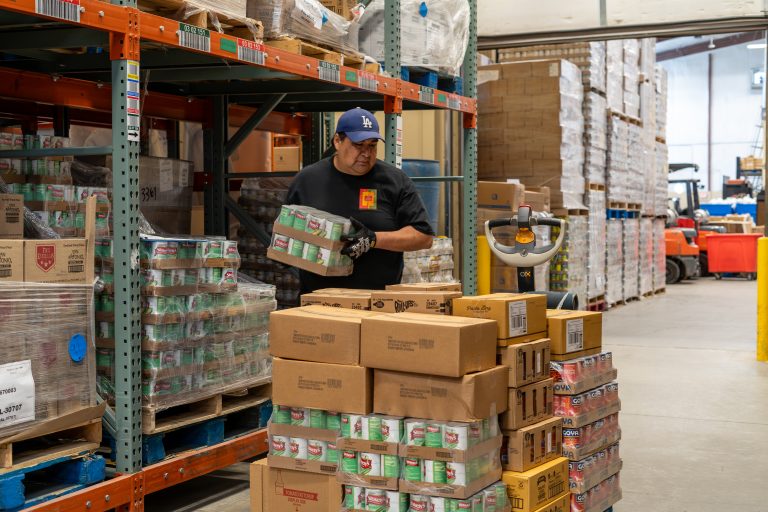
“We just don’t have space,” Amanda explains. Their warehouse felt enormous when it was built in 2017. Now, after doubling distribution and adding freezer capacity, it’s stretched to its limits. “Do we have space to store an entire semi truck of something? The answer is no.”
But the constraint isn’t just space. It’s alignment. In the past, The Food Depot stocked fewer items and sourced the least expensive bulk options. When their strategy shifted to prioritize community outcomes, client choice, and addressing community gaps through a variety of programs, they needed to stock the items those programs require.
“We are always mindful of price and work to get the best deal for our donor dollars. But you can’t always optimize for only the lowest price,” Amanda says. “You have to consider your client needs and your storage. Something might be a good price—but is it healthy? Does it have true demand? Does it meet our program needs? Will it move before it expires?”
That operational discipline—what she calls “intentionality over the excitement of a deal”—is what makes mixing center ordering valuable for operations like theirs. Instead of committing to 40,000 pounds of a single item, they can access the variety their programs require in quantities that align with their distribution cadence.
How Can a Space-Constrained Food Bank Offer More Variety?
The Food Depot’s approach offers a blueprint for food banks facing similar constraints—limited warehouse space, tight budgets, and a desire to serve their community needs beyond bulk commodities.
Pre-assembled boxes reduce operational burden. “It does help when we can buy some things that are pre-packed,” Amanda notes. “It means we don’t have to buy 10 pallets of everything individually. We can then focus our in-house volunteer work on foods like produce with shorter life spans.”
Managed freight matters when timing is everything. With limited warehouse space, variable volunteer schedules, many different programs, and a lean staff, The Food Depot can’t accept deliveries whenever trucks arrive. “It has to line up with the distribution week, and it has to line up with the volunteer force that week. It’s a lot of moving puzzle pieces.”
Choice-based doesn’t equal chaos. “Every program is not choice-based,” Amanda clarifies. “Some people want to just come through the line quickly. Where our surveys prove a community doesn’t need or want choice, we don’t force it.” This allows The Food Depot to standardize where it can and to concentrate variety where it has the greatest impact.
Technology investment enables everything else. Technology plays a huge part in enabling choice-based programs and the variety of items they now stock. Five years ago, The Food Depot didn’t have barcoding. They didn’t even have a dedicated IT person until 2022. Now they can scan items to see when they’ll expire, receive alerts when inventory needs to move, and reduce waste.
“You can only grow if you invest in the foundational things,” Amanda says. “People want to say 99% of the money goes out to programs, but the behind-the-scenes investments actually improve long-term efficiency. You’ve got to invest in the technology. You have to invest in those things to do better overall.”
Box 2: What The Food Depot Learned About Building Variety Without More Space
Invest in foundations first: Barcoding, inventory systems, and dedicated procurement staff aren’t luxuries—they’re prerequisites for managing complexity.
Let feedback drive purchasing: Run partner surveys. Visit agencies. Talk directly to neighbors who benefit from your distributions. When they say “we need tortillas” or “this is too high in sodium,” act on it.
Accept that intentionality sometimes costs more per unit upfront, but it wastes less. Mixing centers may cost slightly more than full truckloads, but the operational flexibility enables a broader portfolio without capital investment—and less food goes to waste when clients actually want what you’re distributing.
Not every program needs maximum choice: Concentrate variety where surveys show demand. Some clients prefer speed over selection.
Choose vendors who are already thinking ahead: If you have to explain your operational constraints, food bank practices, or why healthy options or cultural relevance matter, you’re with the wrong partner.
Why “Closer to the Work” Changed Everything
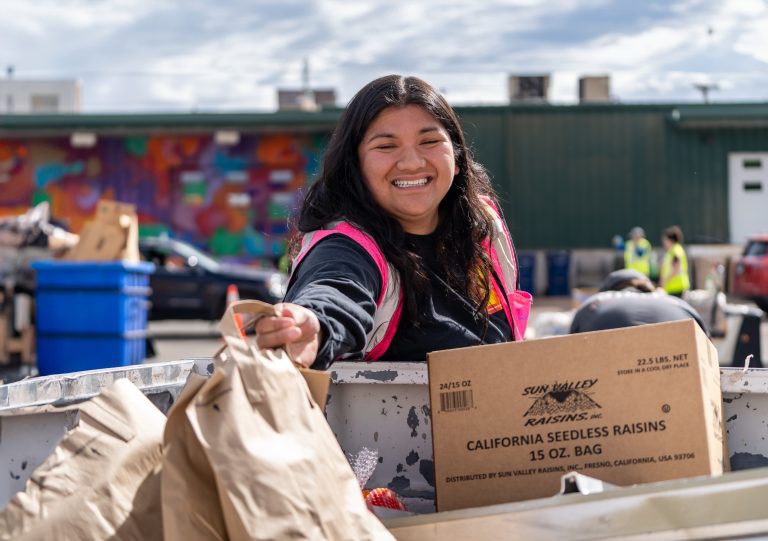
Over the last decade, The Food Depot measured gaps in its largely rural community and stepped in to fill them. Half of their distribution now goes through programs run by their own staff. That proximity to the people they serve changed everything about how they buy.
“When you just procure to give it out to your partners, then you have a wider gap between you and the responsibility,” Amanda explains. “But now we’re closer to the work. Being closer has improved the feedback loop directly from the community. And we can use that feedback to inform our decisions from strategy to operations.”
Being closer meant they couldn’t ignore what they were seeing. Seniors with arthritis who couldn’t cut potatoes. People on sodium-restricted diets who couldn’t eat many canned goods. Clients at the Pueblos who needed culturally appropriate options.
“We made a choice not just to distribute food, but to be a part of improving the community. From health outcomes to advocating for a living wage. One example of how we implement those goals is expanding our healthy eating options. We made a decision that more than 50% of our distribution was going to be fruits and vegetables,” Amanda says. “Last year it was 60% fruits and vegetables, 20% protein. And we added more low-sodium and no-added-sugar options.”
That intentionality extends beyond food selection to how The Food Depot operations runs—including hiring. Because they advocate for a living wage, they pay their staff accordingly: a minimum of $21 per hour, with full benefits coverage. That commitment means every new position must make a strong case for the value it brings. As direct distribution expanded and client choice increased, procurement complexity grew with it. Last year, The Food Depot added a dedicated procurement position—a recognition that the work had outgrown what existing staff could manage while maintaining the intentionality their strategy demands.
That kind of strategic commitment requires vendors who can actually support it. Not just fulfill orders, but understand what food banks are trying to accomplish.
The Feedback Loop That Drives Purchasing
The Food Depot doesn’t guess what its community needs. They ask—constantly.
Their partner agency coordinator visits every agency multiple times a year. They run partner surveys regularly. And when feedback comes in, they act on it.
“Last year, they said: ‘You only get bread from the grocery stores. Why don’t you have tortillas?’ So we started buying tortillas because we don’t get those donated,” Amanda shares. “Or: ‘Why don’t we have personal care products?’ Those are things people actually need that are super expensive. So we started getting more of those.”
The same feedback loop runs through their direct programs, where case managers hear directly from clients. When clients said the food was too high in sodium, they shifted purchasing toward low-sodium options. When they realized that many seniors couldn’t chew raw vegetables or cut hard produce, they reconsidered what “healthy food” means for different populations.
“People say, ‘This is too high in sodium—I couldn’t eat any of it because my doctor said I can’t,’” Amanda explains. “What’s the point of doing all this work to get out food if people’s needs feel unmet?”
What Drives Decisions In Choosing Food Bank Vendors
Amanda is direct about vendor relationships. The Food Depot isn’t just buying products—they’re using donor dollars to serve a community that depends on them.
“Fixed-income seniors call us and give us the last $5 from their purses to fund our food bank and help us feed people,” she says. “When a company doesn’t respect the work that we do, it’s very easy for me to say: we should not give you our money. Because it’s not our money—it’s our donors’ money.”
What earns their business isn’t just price or product selection. It’s whether vendors understand what food banks are actually trying to accomplish and the unique needs they have.
“If people are talking about medically tailored meals, Medicaid 1115 waivers—if that kind of stuff is floating in the food spaces, then it’s important for our vendors to be responsive to that,” Amanda explains. “So if you’re seeing that food banks need those items, and you’re responding with healthy boxes, and you’re putting recipes in your newsletters to help clients with meal ideas for the food items—that stuff’s important to us.”
Then she articulated what differentiates a vendor from a partner:
“We don’t have to ask for it. You’re already thinking about it.”
Scott Alexander, The Food Depot’s Director of Operations and Procurement, sees that philosophy play out in the day-to-day: “Working with VAFS makes our work easier. Meegan Gless, Southwest Regional Sales Manger, our representative, is beyond outstanding. The pallets and the quantities ordered are always the quantities received, which makes it easy for our receiver at the warehouse. VAFS unique online ordering system is designed in a way to help me realize exactly how much will fit on a truck for each order, and VAFS is the only company I’ve used with this technology. Their invoicing and sales orders are automatic and always accurate. We’ve worked with VAFS for around two years, and we will certainly work with them into the future.”
Choice Isn’t Easy. But It’s Right.
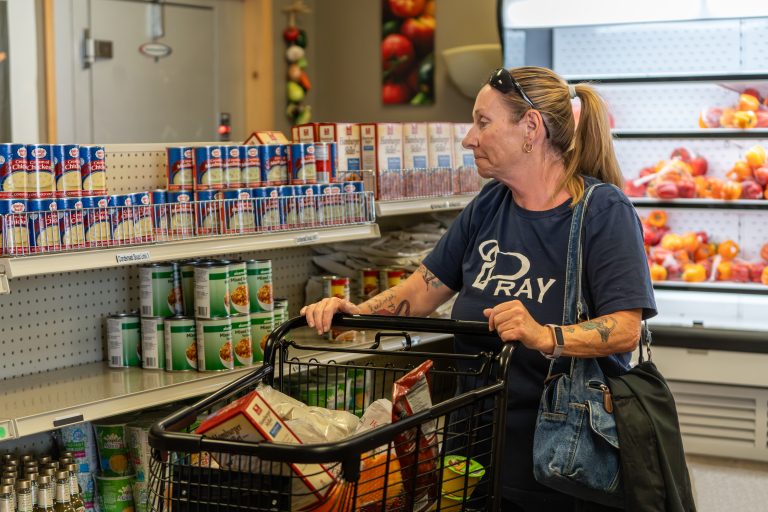
When The Food Depot launched its Food Mobile program in 2021, clients could choose from 8-10 items. Staff would hand out food and take requests, such as “I don’t want bread” or “I prefer this produce over that one,” and accommodate them where possible.
This year, they invested in a new vehicle. Now, clients walk on and browse food displayed on shelves like a grocery store, and the number of choices jumped to 35.
More choice means more variety in the warehouse. More variety means more complexity in procurement. Amanda doesn’t pretend it’s simple.
“I don’t think it’s ever easier to make things more equitable,” she says. “It’s always easier to just throw food into somebody’s trunk. It’s always easier to standardize.”
She pauses.
“But we know it’s the right thing to do. To give people choice. To make them feel like they have more agency over their food.”
That philosophy—dignity through choice, strategy through intentionality, partnership through shared values—runs through everything The Food Depot does. Including how they buy.
“When you take on the responsibility of a strategic plan to say we want the food to be healthier and culturally relevant,” Amanda explains, “it means we have to order those things to fulfill that promise. And so that means we have to order that type of food.”
Not just whatever’s cheap. Not just whatever fits on a truck. The food their community actually needs.
About The Food Depot
Organization: The Food Depot Location: Santa Fe, New Mexico Service Area: Nine counties across 26,000 square miles in northern New Mexico Network: Feeding America Affiliate Website: thefooddepot.org Spotlight Contact: Amanda Bregel, Director of Marketing and Communications
What they do: The Food Depot is the regional food bank for northern New Mexico, serving a predominantly rural area where only one of its nine counties is urban. As a Feeding America affiliate—operating with different funding structures than Feeding America partner food banks—the procurement strategy is especially critical. Only 20% of their food comes from donations; the remaining 80% must be purchased, driving their sophisticated approach to vendor relationships and purchasing decisions.
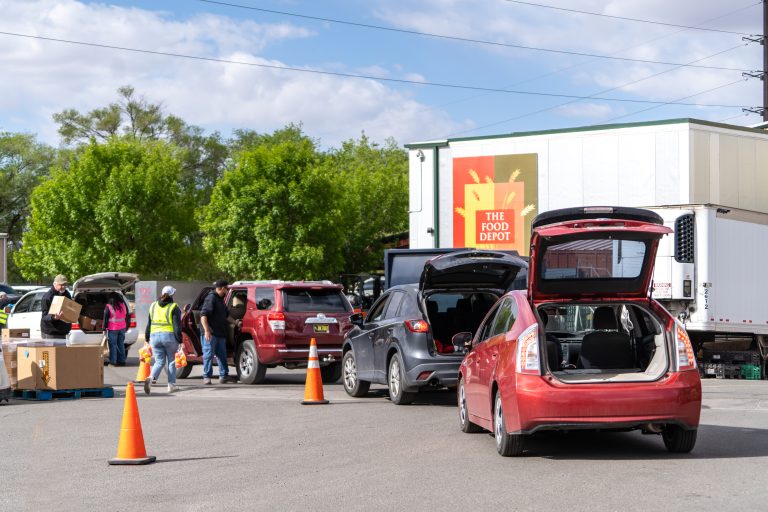
Unlike traditional food banks that primarily distribute through partner agencies, The Food Depot runs half of its distribution through its own staff-managed programs: school pantries across the region, rural drive-through distributions, a no-cost grocery store in Española, and its Food Mobile—a converted vehicle where clients can walk on and choose from items displayed on shelves like a grocery store.
The Food Depot partners with VAFS for shelf-stable purchasing, including healthy eating options, pre-assembled food boxes and mixing center orders that support their high-variety, space-constrained operation. To learn more about how VAFS supports food banks in building or expanding choice-based programs, contact us.
Together… we can bring more to the table.